








-228x228.jpg "How to Sell Yourself")
















-228x228.png "Baby fashion doll")









-228x228.jpg "Accu-Chek FastClix")


-228x228.jpg "Kenacort retard 40 mg1 ml suspension injectable boite de 1 ampoule 1 seringue 2 aiguilles de 1 ml")





-228x228.jpg "Jersey tubulaire en coton 10cm")


-228x228.jpg "Anti Moustique 195ml Longrich")

















-228x228.JPG "Cahier white en paquet")


-228x228.jpg "ALERGOSONE 0,5mg-ml gtte Flacon de 30 ml")


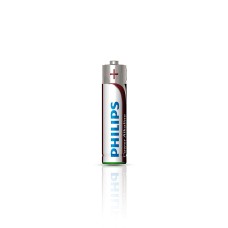

ACYCLOVIR DENK 200MG 25 TABS
-500x500.jpg "ACYCLOVIR DENK 200MG 25 TABS")
Cliquez sur Image pour la Galerie
-500x500.jpg "ACYCLOVIR DENK 200MG 25 TABS")
Acyclovir Denk 200mg in is used mainly for the treatment of viral infections due to herpes simplex virus (types 1 and 2) and varicella-zoster virus (herpes zoster and chickenpox).
| Pharmacie | |
| Conseils | Aciclovir/Herperax in Kenya is administered by intravenous infusion as the sodium salt over 1 hour. Doses are expressed in terms of the base. Aciclovir sodium 1.1 g is approximately equivalent to 1 g of aciclovir. Solutions for infusion are usually prepared to give a concentration of 25 or 50 mg of aciclovir per mL; this must then be further diluted in a suitable infusion fluid such as water for injections or sodium chloride 0.9% to a final concentration not greater than about 5 mg/mL (0.5%). Alternatively, a solution containing 25 mg/mL may be given by injection using a controlled-rate infusion pump, over 1 hour. |
| Description | Uses and Administration of Acyclovir Denk 200mg in Kenya Aciclovir is a synthetic purine nucleoside analogue structurally related to guanine. It is used mainly for the treatment of viral infections due to herpes simplex virus (types 1 and 2) and varicella-zoster virus (herpes zoster and chickenpox). Herpes simplex infections, including herpes keratitis, herpes labialis, and genital herpes, respond to aciclovir by the intravenous, oral, or topical route, given as soon as possible after symptoms appear. Both initial and recurrent infections can be successfully treated. Prolonged treatment can reduce the incidence of recurrence which is particularly important in immunocompromised patients. However, when prolonged treatment is withdrawn, infections may recur. Aciclovir also improves the healing of herpes zoster lesions and reduces acute pain when given intravenously or by mouth; use to prevent postherpetic neuralgia is controversial. Beneficial effects may be more marked in immunocompromised patients. For herpes simplex infections in the immunocompromised, and for severe initial genital herpes, or varicella-zoster infections in immunocompetent patients, the dose by the intravenous route is 5 mg/kg given every 8 hours, and recommended periods of treatment range from 5 to 7 days. A similar dose may be used for prophylaxis of herpes simplex infections in immunocompromised patients. A higher dose of 10 mg/kg every 8 hours is given in the treatment of herpes simplex encephalitis. This higher dose is also given in varicella-zoster infections in immunocompromised patients. Herpes simplex encephalitis usually requires treatment for 10 days. Oral doses of aciclovir vary according to indication. For treatment of primary herpes simplex infectionsin Kenya, including genital herpes, the usual oral dose is 200 mg five times daily (usually every 4 hours while awake) for 5 to 10 days. Severely immunocompromised patients or those with impaired absorption may be given 400 mg five times daily for 5 days. For suppression of recurrent herpes simplex in immunocompetent patients, the oral dose is 800 mg daily in two to four divided doses; dosage reduction to 400 to 600 mg daily can be tried. Higher doses of 1 g daily have also been used. Therapy should be interrupted every 6 to 12 months for reassessment of the condition. For prophylaxis of herpes simplex in immunocompromised patients, the dose is 200 to 400 mg four times daily. Chronic suppressive treatment is not suitable for mild or infrequent recurrences of herpes simplex. In such cases episodic treatment of recurrences may be more beneficial; a dose of 200 mg five times daily for 5 days has been recommended, preferably initiated during the prodromal period. The usual oral dose of aciclovir for treatment of chickenpox is 800 mg four or five times daily for 5 to 7 days; for herpes zoster 800 mg five times daily may be given for 7 to 10 days. In herpes simplex infections of the skin in Kenya, including genital herpes and herpes labialis, topical treatment with an ointment or cream containing aciclovir 5% may be applied 5 or 6 times daily for periods of 5 to 10 days. In herpes simplex keratitis a 3% eye ointment may be applied 5 times daily until 3 days after healing. Doses should be reduced in renal impairment.? Children’s doses. In children, the 8-hourly intravenous dose is best calculated by body-surface using 250 mg/m2 for herpes simplex and varicella-zoster infections in immunocompetent patients and 500 mg/m2 for herpes simplex encephalitis and varicella-zoster infection in the immunocompromised. A suggested 8-hourly dose for infants and neonates is 10 mg/kg; treatment for neonatal herpes usually continues for 10 days. In the treatment of herpes simplex infections, and in the prophylaxis of herpes simplex infections in the immunocompromised, oral doses of aciclovir for children aged 2 years and over are as for adults. Children aged under 2 years are given half the adult dose. In the treatment of chickenpox, children over 2 years of age may be given 20 mg/kg, up to a maximum of 800 mg, four times daily for 5 days. Alternatively, children aged 6 years and over may be given 800 mg four times daily, those aged 2 to 5 years may be given 400 mg four times daily, and those aged under 2 years may be given 200 mg four times daily. |
- Modèle : 8040714
- Disponibilité : En Stock
- Ordonance: L'ordonance est Obligatoire
- 7 510FCFA
- H.T : 7 510FCFA
